
Ayurvedic Remedies for Gut Health: 7 Natural Ways to Improve Digestion
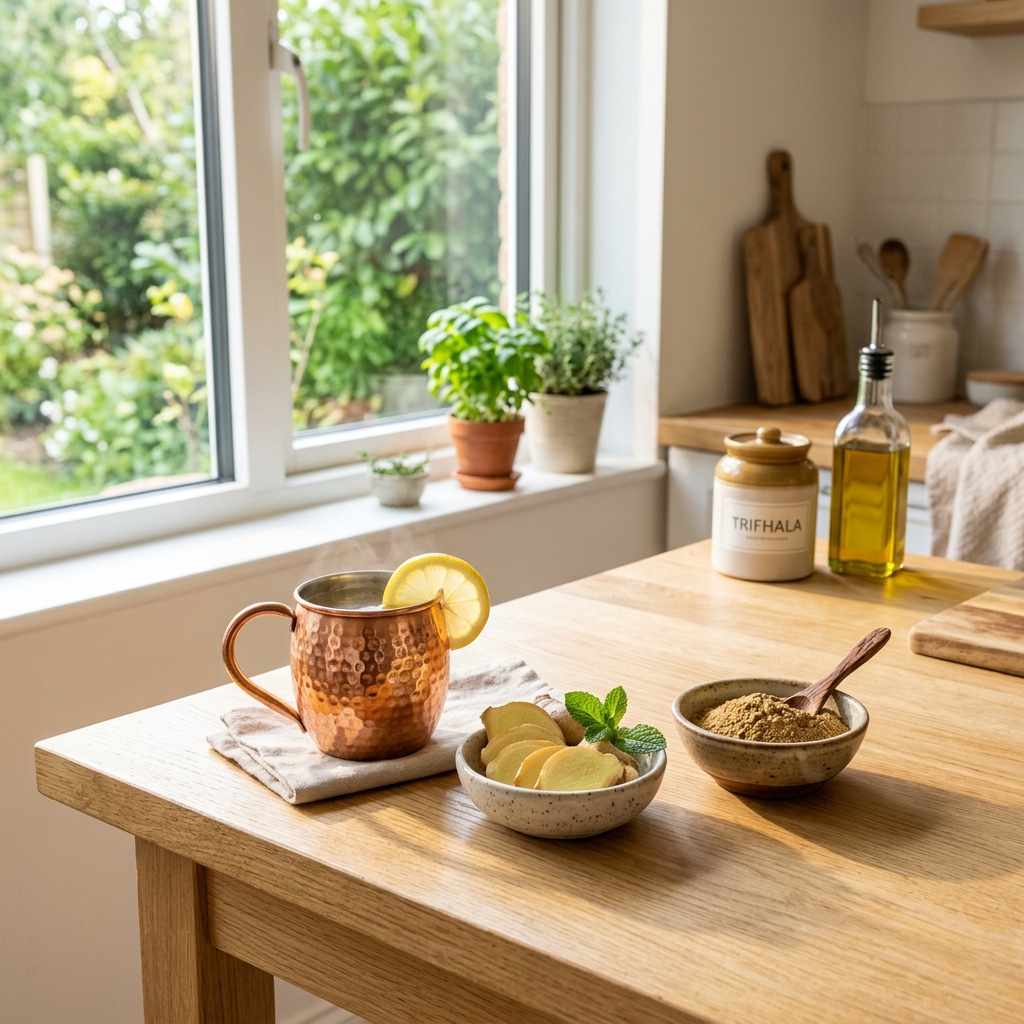
Ayurvedic Remedies for Gut Health: 7 Natural Ways to Improve Digestion
TL;DR: Ayurveda addresses gut health as the foundation of overall wellness. Key remedies include Triphala for daily detox, ginger for digestive fire, CCF tea for bloating, and a simple daily routine that strengthens your Agni (digestive fire). Combine these with a gut-healing kitchari diet, and most people see real improvement within 2-3 weeks.
Key Takeaways
- A weak digestive fire (Agni) is the root cause of most gut problems in Ayurveda
- Triphala, ginger, and CCF tea are the 3 most effective Ayurvedic gut remedies
- A consistent morning routine matters more than any single herb
- Kitchari cleanse for 3-7 days can reset your entire digestive system
- Most people see noticeable improvement within 2-3 weeks of consistent practice
What Gut Health Means in Ayurveda
Gut health in Ayurveda is not just about how fast food moves through you or how many BMs you have. It's about Agni — your digestive fire.
Here's the core idea: You have a fire in your belly. When it's burning strong, you digest food well, absorb nutrients, and feel light and energetic after eating. When it's weak, food sits undigested, turns into Ama (toxins), and starts causing bloating, gas, fatigue, and eventually disease.
Ayurveda sees the gut not just as a digestion machine but as the root of your entire health. The Charaka Samhita, one of Ayurveda's oldest texts, says: "Rogastu doshavaiparitya, dosha dhatu mala kshayat" — all disease originates from imbalances in digestion.
And modern science agrees. The gut microbiome — the trillions of bacteria living in your digestive tract — is now being linked to everything from immunity to mood to chronic disease. A 2020 randomized study on Triphala found that this Ayurvedic formulation significantly modulated gut microbiota composition in human subjects.
Why Gut Health Matters More Than You Think
You know that heavy feeling after a meal? The bloating that makes you unbutton your jeans? The gas that embarrasses you in meetings?
These are not normal. But most people accept them as "just how digestion works."
Here's what actually happens when your gut is weak:
- Nutrients don't get absorbed — even healthy food passes through without giving you its benefits
- Ama (toxins) accumulate — undigested food particles enter your bloodstream and trigger inflammation throughout the body
- Your immunity drops — 70% of your immune system lives in your gut. A weak gut = frequent colds, allergies, skin problems
- Your mood suffers — the gut-brain axis is real. Bloating, constipation, and indigestion directly affect your mental state through serotonin production (90% of which happens in your gut)
- Your skin breaks out — acne, eczema, and dull skin often trace back to poor digestion
I have seen people come to me with all sorts of complaints — fatigue, anxiety, acne, joint pain. And 8 out of 10 times, the root cause was poor digestion. Fix the gut, and so many other things fall into place on their own.
The 3 Most Effective Ayurvedic Herbs for Gut Health
These three herbs form the backbone of any Ayurvedic gut healing protocol. They work differently, so they complement each other perfectly.
1. Triphala — The Daily Gut Cleanse
Triphala is a blend of three fruits: Amla (Indian gooseberry), Haritaki (chebulic myrobalan), and Bibhitaki (belleric myrobalan). Together, they create a formulation that works on all three doshas.
What Triphala actually does for your gut:
- Mild laxative — it regulates bowel movements without causing dependence (unlike commercial laxatives)
- Rebalances gut microbiome — the 2020 study mentioned earlier showed Triphala supplementation significantly increased beneficial bacteria like Lactobacillus and Bifidobacterium
- Detox without harshness — it gently scrapes Ama from the digestive tract without disturbing the gut lining
- Tones the colon — strengthens the muscles of the large intestine for long-term digestive health
How to take it: 1/2 to 1 teaspoon of Triphala powder mixed in warm water at bedtime. Start with 1/2 teaspoon and see how your body responds. Most people feel the difference within 3-4 days.
2. Ginger (Adrak) — Agni Igniter
Ginger is the best herb to strengthen digestive fire. It's called vishwabheshaj in Ayurveda — "the universal medicine."
Fresh ginger is different from dried ginger powder. For gut health, fresh ginger is what you want. It's more effective at kindling Agni without aggravating Pitta.
My go-to recommendation: Take a thin slice of fresh ginger with a pinch of rock salt and a few drops of lemon juice about 10-15 minutes before meals. This literally "lights the fire" of your digestion so your meal processes more efficiently.
Ginger also has strong anti-inflammatory compounds called gingerols and shogaols that reduce gut inflammation. A study published in the Journal of Alternative and Complementary Medicine demonstrated ginger's effectiveness in improving gastric motility and reducing bloating.
3. CCF Tea (Cumin-Coriander-Fennel) — The Bloating Buster
This is the simplest, most affordable gut remedy you'll ever find. And it works remarkably well.
Take equal parts cumin seeds (jeera), coriander seeds (dhaniya), and fennel seeds (saunf). About 1 teaspoon total. Steep in 2 cups of boiling water for 5-7 minutes. Strain and sip throughout the day.
Why this combination works:
- Cumin — stimulates digestive enzymes and relieves gas
- Coriander — cools the gut, reduces inflammation, supports liver function
- Fennel — relaxes intestinal muscles, relieves bloating and spasms, freshens breath
Drink this after meals or between meals when you feel bloated. Most people report noticeable relief within 20-30 minutes.
Ayurvedic Morning Routine for Better Digestion
Here's a simple morning routine that supports gut health. Do this before anything else — before tea, coffee, or breakfast.
Step 1: Warm Lemon Water on Wake-Up
As soon as you wake up, drink 1-2 glasses of warm water. Add a squeeze of fresh lemon if you like. This flushes the digestive tract from the overnight fast and stimulates the digestive organs to wake up.
Step 2: Tongue Scraping
Scrape your tongue every morning. The white coating you see is toxic waste (Ama) that your body expelled overnight. If you don't scrape it off, it gets reabsorbed. Use a copper or stainless steel tongue scraper — not your toothbrush.
Step 3: Ginger Lemon Shot
10 minutes before breakfast, take a small piece of fresh ginger (about the size of your thumbnail) with a squeeze of lemon and a pinch of rock salt. Chew it slowly. This sparks your digestive fire and prepares your stomach for the first meal.
Step 4: Eat Your Largest Meal at Lunch
Ayurveda recommends eating your largest meal at noon, when your digestive fire is naturally strongest (Pitta time, 10am-2pm). Dinner should be lighter and eaten before 7pm — ideally at least 3 hours before bed.
Ayurvedic Gut-Healing Diet: What to Eat and What to Avoid
Herbs alone won't fix a gut that's constantly being irritated by the wrong foods. Here's the baseline gut-healing Ayurvedic diet.
Eat These
| Food | Why It Helps |
|---|---|
| Kitchari (rice + mung dal + spices) | The ultimate gut-healing meal. Easy to digest, complete protein, all 6 tastes balanced. Eat this for 3-7 days as a mono-diet if your gut is severely irritated |
| Ghee (clarified butter) | 1 tsp with meals lubricates the digestive tract, improves absorption, nourishes gut lining |
| Buttermilk (Chaas) | Blend fresh yogurt with water, cumin, salt, and fresh coriander. Drink after lunch. It's a probiotic that cools the gut and helps digestion |
| Cooked vegetables | Zucchini, carrots, pumpkin, bottle gourd — easy to digest, high in fiber, not gaseous |
| Warm, cooked foods | Avoid raw salads for a while if your digestion is weak. Cooked foods are easier to process and don't weaken Agni |
Avoid These
- Cold drinks with meals — this literally extinguishes your digestive fire. Drink warm water or room temperature water between sips of food
- Raw salads at night — raw foods are harder to digest and your Agni is weakest in the evening
- Fermented foods initially — kimchi, kombucha, sauerkraut are too strong for a weakened gut. Introduce slowly after 2-3 weeks of healing
- Fried and oily foods — heavy for the digestive system, create Ama
- Excessive red meat and dairy — both are heavy and slow to digest. If you consume them, keep the portions small and eat them at lunch when digestion is strongest
When to See an Ayurvedic Doctor
These home remedies work well for common digestive issues — bloating, gas, occasional constipation, mild acid reflux. But some situations need professional help.
See an Ayurvedic practitioner if:
- You have chronic digestive issues lasting more than 3 months despite consistent home care
- You experience severe abdominal pain, blood in stool, or unexplained weight loss
- You have been diagnosed with IBS, Crohn's, ulcerative colitis, or SIBO
- You need Panchakarma (the Ayurvedic detoxification therapy) — this requires professional supervision
- Your digestion issues are accompanied by severe anxiety, depression, or sleep problems (suggests deep Vata imbalance)
An Ayurvedic doctor can do a proper Nadi Pariksha (pulse diagnosis) to determine your exact doshic imbalance and prescribe custom herbs and treatments.
Frequently Asked Questions
Q: How long does it take for Ayurvedic remedies to improve gut health?
A: Most people notice improvement in 2-3 weeks. Bloating and gas often reduce within the first week. Full healing — including consistent bowel movements and resolved chronic issues — typically takes 3-6 months of consistent practice.
Q: Can I take Triphala every day for gut health?
A: Yes, Triphala is one of the few herbs in Ayurveda considered safe for daily long-term use. Take 1/2-1 tsp powder in warm water at bedtime. If you experience loose stools, reduce the dose. Skip it if you have acute diarrhea.
Q: Is Ayurvedic gut healing safe alongside modern medicine?
A: Generally yes, but always inform your doctor about any herbs you're taking. Some herbs can interact with medications. For example, Triphala may affect absorption of certain drugs due to its mild laxative effect.
Q: What is the best Ayurvedic remedy for bloating?
A: CCF tea (cumin-coriander-fennel) is the quickest — it often provides relief within 20-30 minutes. For daily prevention, take fresh ginger with lemon before meals and avoid cold drinks.
Q: Can Ayurveda help with IBS (Irritable Bowel Syndrome)?
A: Yes. Ayurveda addresses IBS by balancing Vata dosha (which controls movement in the colon) and strengthening Agni. A Pitta-pacifying diet and herbs like Triphala, ginger, and licorice are commonly used. An individualized approach works best — see an Ayurvedic practitioner for a personalized plan.
Medical Disclaimer: The information on this website is for informational and educational purposes only. It is not a substitute for professional medical advice, diagnosis, or treatment. Always consult a qualified healthcare provider before starting any supplement, herb, or Ayurvedic treatment, especially if you are pregnant, nursing, have a medical condition, or are taking prescription medications.
Conclusion
Gut health is not complicated. You don't need 20 different supplements or a fancy protocol. Start with these 3 things:
- Triphala at night — 1/2 tsp with warm water before bed
- Fresh ginger before meals — a thin slice with salt and lemon, 10 minutes before eating
- CCF tea during the day — sip it after meals when you feel bloated
And fix your eating routine — warm water in the morning, biggest meal at lunch, light dinner before 7pm.
Try this for 3 weeks. I'm willing to bet your gut will feel different. Share your experience in the comments — I read every single one.
📖 Also Read:
Join the conversation