
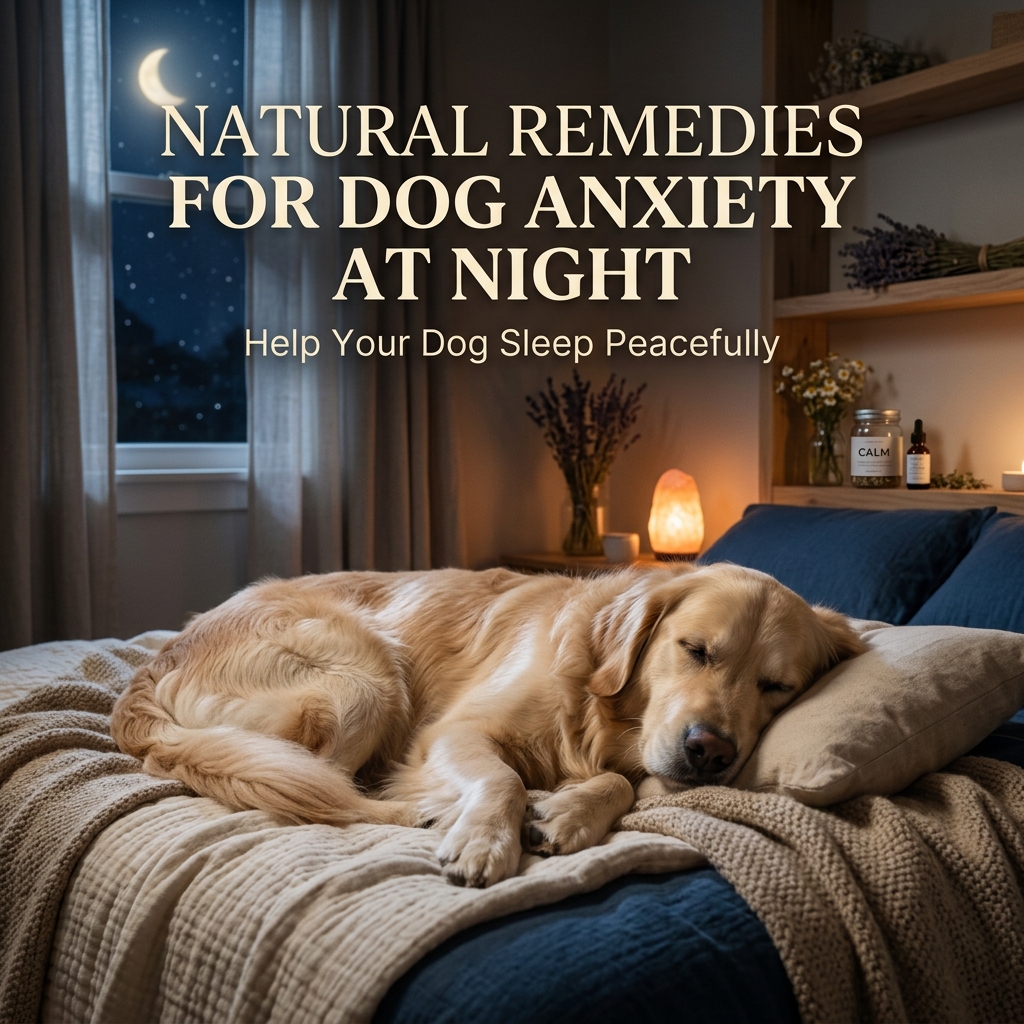
Natural Remedies for Dog Anxiety at Night: Help Your Dog Sleep Peacefully
Why Is My Dog Anxious at Night?
Does your dog pace, whine, pant, or seem restless when it is time to sleep? Nighttime anxiety in dogs is more common than many owners realize, and it can be exhausting for both you and your furry friend.
Common causes of nighttime anxiety in dogs include:
- Separation anxiety — your dog is away from you while sleeping
- Sensory changes — darkness reduces visual cues and can increase alertness
- Hearing sensitivity — nighttime sounds are more noticeable in the quiet
- Aging-related cognitive decline — senior dogs may experience confusion at night
- Medical issues — pain, discomfort, or urinary urgency can mimic anxiety
- Trauma history — rescue dogs may have negative associations with darkness
The good news: there are many natural, effective remedies that can help your dog relax and sleep through the night.
Natural Remedies for Nighttime Dog Anxiety
1. Establish a Consistent Bedtime Routine
Dogs thrive on routine. A predictable evening schedule signals to your dog that it is time to wind down:
- Evening walk — 20–30 minutes of gentle exercise to burn off excess energy
- Last bathroom break — ensure bladder is empty before bed
- Calming activity — gentle brushing, massage, or puzzle toy
- Quiet time — dim lights and reduce noise 30 minutes before bed
- Consistent bedtime — go to bed at roughly the same time each night
2. Create a Cozy Sleep Space
Your dog's sleeping area should be a safe, comfortable retreat:
- Choose the right location — many anxious dogs sleep better near their owners
- Use a crate — properly introduced crates provide a den-like sense of security
- Comfortable bedding — orthopedic beds for older dogs, soft blankets for comfort
- Familiar scents — an unwashed t-shirt with your scent can be deeply calming
- Temperature control — a cool, well-ventilated room promotes better sleep
3. Calming Herbal Supplements
Ashwagandha: This adaptogenic herb helps regulate the stress response and can be particularly effective for nighttime anxiety when given consistently. Use 50–200 mg depending on your dog's weight.
Chamomile: A gentle, safe herb that promotes relaxation. Brew a weak chamomile tea, let it cool, and add a tablespoon to your dog's evening meal.
Valerian root: More potent than chamomile, valerian root has mild sedative properties that can help with acute nighttime anxiety. Best used situationally rather than nightly.
CBD (Hemp Extract): Full-spectrum CBD interacts with the endocannabinoid system to promote calm and balanced mood. Many owners report significant improvements in nighttime anxiety with CBD.
4. Calming Music or White Noise
Sound therapy can be remarkably effective for anxious dogs:
- Classical music — studies show it reduces stress behaviors in dogs
- Pink noise or white noise — masks outside sounds that trigger alertness
- Dog-specific calming music — many streaming services have playlists designed for dogs
- Leave a radio on low — human voices can be comforting for dogs with separation anxiety
5. Pressure Wraps (Thundershirts)
A pressure wrap applies gentle, constant pressure to your dog's torso, similar to swaddling a baby. This pressure triggers the release of calming hormones and can significantly reduce anxiety for many dogs. You can purchase a Thundershirt or make a DIY version with a snug-fitting dog shirt or wrap.
6. Aromatherapy
Dogs have an extraordinary sense of smell, and certain scents can promote calm:
- Lavender — the most well-researched calming scent for dogs
- Chamomile — gentle and safe for use around dogs
- Frankincense — grounding and calming
Important: Use a diffuser (never direct application) and ensure the room is well-ventilated. Only use 100% pure essential oils safe for dogs. Never apply oils directly to your dog's skin or fur.
7. Exercise and Mental Stimulation
A tired dog is a calm dog. Ensure your dog gets adequate physical exercise and mental stimulation during the day:
- Physical exercise: Walks, fetch, swimming — adjust intensity to your dog's age and breed
- Mental stimulation: Puzzle toys, training sessions, sniffing games
- Timing matters: Avoid intense exercise right before bed (can be overstimulating)
When to See a Veterinarian
If your dog's nighttime anxiety persists despite trying natural remedies, consult your veterinarian to rule out underlying medical issues:
- Pain from arthritis or dental disease
- Urinary tract infections
- Cognitive dysfunction syndrome (similar to dementia)
- Vision or hearing loss
- Thyroid imbalances
The Bottom Line
Nighttime anxiety in dogs is manageable with the right combination of natural remedies. Start with routine and environmental changes, then add herbal support if needed. Be patient — it may take 2–4 weeks to find the right combination for your dog.
Remember: a calm owner leads to a calm dog. Your own relaxation signals safety to your anxious pup.
Disclaimer: This article is for informational purposes only. Always consult with your veterinarian before starting any new supplement or treatment.
Join the conversation